If you have ever been handed a PDF an hour before a meeting and told to “put it on slides,” you know the small panic that follows. The good news: converting a PDF into a PowerPoint presentation is quick, and you do not need paid software or an account to do it. This guide walks through three free methods, when to use each, and exactly what to expect from the text once it lands on your slides.
The short answer
Yes, you can convert a PDF to PowerPoint for free. The fastest route is a browser-based converter like the free PDF to PowerPoint tool — choose your PDF, download a .pptx file, done. Each page arrives as a pixel-accurate image on its own slide, so the original design survives completely intact. If you need every word to stay editable, you will want to rebuild the deck inside PowerPoint or Google Slides instead. Below is exactly how each method works and which one fits your situation.
Method 1: Use a free online PDF to PowerPoint converter
This is the method most people want: no install, no signup, works on any device including a phone. Here is the process step by step.
- Open the PDF to PowerPoint converter in your browser.
- Drag your PDF onto the drop zone, or click to browse and select it.
- Wait a few seconds while each PDF page is placed onto its own slide.
- Download the resulting
.pptxfile and open it in PowerPoint, Keynote, or Google Slides.
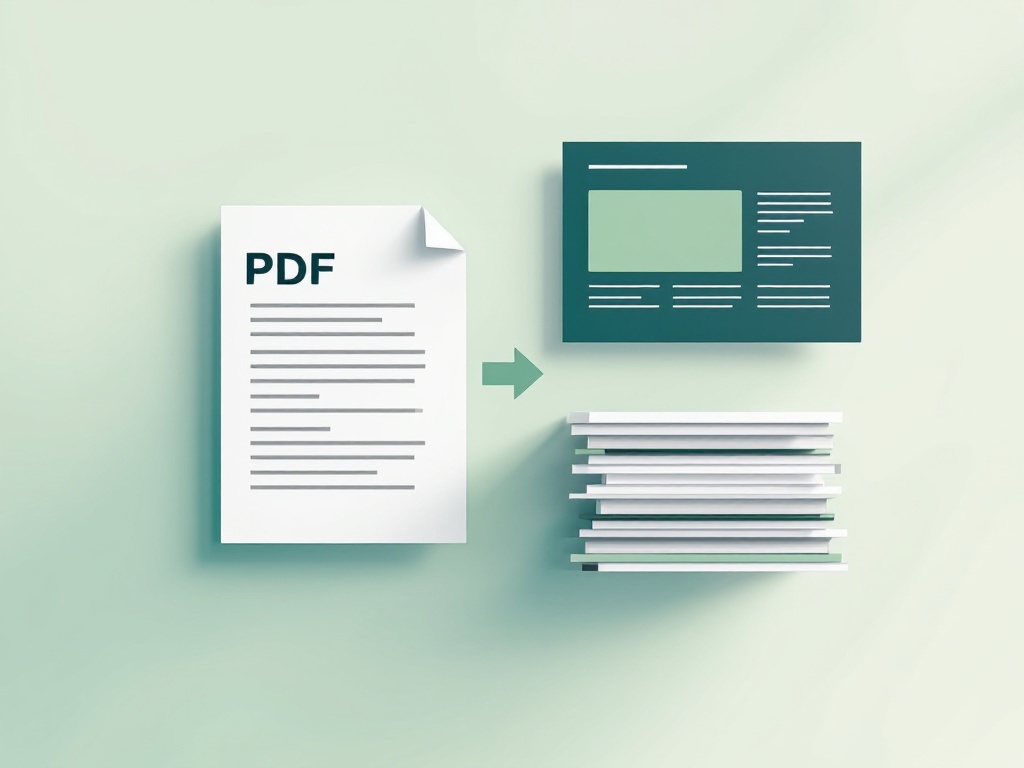
Every page of the PDF becomes a slide, so a 12-page PDF gives you a 12-slide deck. Each page is rendered as a high-resolution image and the slide is sized to match the original page dimensions, which is why the layout comes through exactly as designed. The conversion runs entirely in your browser — your file is never sent to a server at all, which matters when the document is confidential.
Method 2: Convert inside PowerPoint itself
If PowerPoint is already open and you want the content as fully editable slides, you can bring the PDF in directly:
- Insert as an object: Go to Insert › Object › Create from file, choose your PDF, and it drops onto the slide. Good for showing a single page, less good for a full deck.
- Copy the text: Open the PDF, select the text you need, and paste it onto a slide. This gives you clean, editable text but drops the original layout — you rebuild the design yourself.
Use this route when the deck matters more than speed and you want pixel-level control over every slide. It is the only method here that hands you the original wording as live, retypeable text.
Method 3: The Google Slides route
No PowerPoint installed? Google Slides works entirely in the browser and exports to .pptx:
- Convert the PDF to slides using Method 1, then open the file in Google Slides (File › Open).
- Add your own titles, text boxes and notes on top of the imported pages, then export with File › Download › Microsoft PowerPoint (.pptx).
This is the best free option if you are on a Chromebook or a locked-down work laptop. Note that you are building around the imported pages rather than rewriting the text inside them — the next section explains why.
Which method should you pick?
- Need it in 30 seconds? Method 1 — the online converter.
- Need every word editable and on-brand? Method 2 — copy the text into your own template.
- No Office software at all? Method 3 — Google Slides.
Can you edit the text after converting?
This is the question that trips people up, so here is the straight answer for our converter: no, and it is a deliberate trade-off. Every PDF page is rendered as a high-resolution image and placed on its own slide. That is precisely what keeps the result pixel-identical to the original — but it also means the words are part of the picture. You cannot click into a paragraph and retype it.
This is true regardless of how the PDF was made. A PDF exported straight out of Word behaves exactly the same as one scanned from paper; both end up as images on slides.
What you can do is add your own text boxes, shapes, arrows and callouts on top of each slide. For plenty of real jobs — annotating a report, presenting from an existing document, walking a client through a proposal — that is all you actually need.
If you genuinely need the original words as editable text, you have two options. If the PDF has selectable text, copy it straight out and paste it into your own slide template (Method 2). If it is a scan with no selectable text at all, run it through our free OCR tool first to pull the words out, then paste them in.
Tips for the cleanest result
- Compress bloated PDFs first. If the file is huge or slow to process, run it through a PDF compressor before converting.
- Split long documents. Turning a 60-page report into slides rarely reads well — pull out only the pages you need.
- Fonts are not a worry here. Because each page is an image, the original typefaces are baked in and cannot be substituted on another machine — one genuine advantage of the image approach.
- Convert, then polish. Treat the converted deck as a starting point: add a title slide, drop in callouts, and cut the pages that do not earn their place.
Common problems and fixes
- The text will not edit → expected behaviour, not a bug: each page is placed as an image, so its text is part of the picture. Add your own text boxes on top, or use Method 2 to get editable wording.
- Slides are the wrong size → our converter matches each slide to the PDF’s own page dimensions. If you need a standard 16:9 deck, set it in PowerPoint’s Design › Slide Size after import and reposition as needed.
- A page looks soft or pixelated → usually a very large page scaled down. Try converting that page on its own, or crop it in the PDF first.
Frequently asked questions
How do you convert a PDF to PowerPoint for free?
Open a free browser-based converter such as ToolBrainy’s PDF to PowerPoint tool, choose your PDF, and download the .pptx file. Nothing is uploaded — the conversion happens inside your browser. There is no signup, no watermark, and it works on desktop or mobile.
Can I convert a PDF to PowerPoint without installing software?
Yes. Online converters and Google Slides both run entirely in your browser, so nothing needs to be installed. This is the easiest option on a work laptop or Chromebook where you cannot install apps.
Will the converted slides be editable?
You can edit the deck, but not the original words. Each PDF page is placed on its slide as an image, so the text is part of that picture — and that holds whether the PDF came from Word or from a scanner. You can freely add your own text boxes, shapes and notes on top. To get the original wording as live text, copy it out of the PDF and paste it into your own template, or run a scanned PDF through an OCR tool first.
Does converting keep my original formatting?
Yes, completely. Each page is imported as an image at its original proportions, so nothing reflows, no spacing shifts and no fonts get substituted on another machine. The trade-off for that fidelity is that the text is not separately editable.
Is it safe to convert confidential PDFs online?
With our converter, yes — it runs entirely in your browser and your file is never sent to a server at all. You can verify this yourself: open your browser’s Network tab before converting, and you will see the page’s own scripts and code libraries load, but never your document. Be aware that many other online converters do upload your file, so check before using one.
How do I convert just a few pages instead of the whole PDF?
Extract the pages you need first, then convert only those. This keeps the deck focused and avoids a slide for every single page of a long report.
The one-minute version
For most people, converting a PDF to PowerPoint is a 30-second job: drop it into a free online converter, download the .pptx, and polish the slides that need it. What you get is a deck that looks exactly like the PDF, with each page as an image you can annotate on top of. Reach for Method 2 when the original wording has to be editable and on-brand, and Google Slides when you have no Office software at all. Whichever route you take, you never need to pay for it.
Handy tools for this topic
70+ free tools, zero sign-up
Every ToolBrainy tool runs right in your browser — no accounts, no watermarks and no limits. Compress a PDF, generate a strong password, convert an image and plenty more.