You’re sending a proposal that isn’t final yet, or a design proof a client shouldn’t be forwarding around, and you want the file to say so on every page. A watermark is the obvious answer. The part that trips people up is what happens next: the watermark comes out so faint nobody notices it, or so heavy the document underneath becomes unreadable.
The other thing worth clearing up early, because we get asked it constantly: a watermark is a label, not a lock. It tells a reader how to treat the document. It does not stop anyone doing anything with it. Once you separate those two jobs, the whole thing gets much simpler.
What a watermark actually does — and what it doesn’t
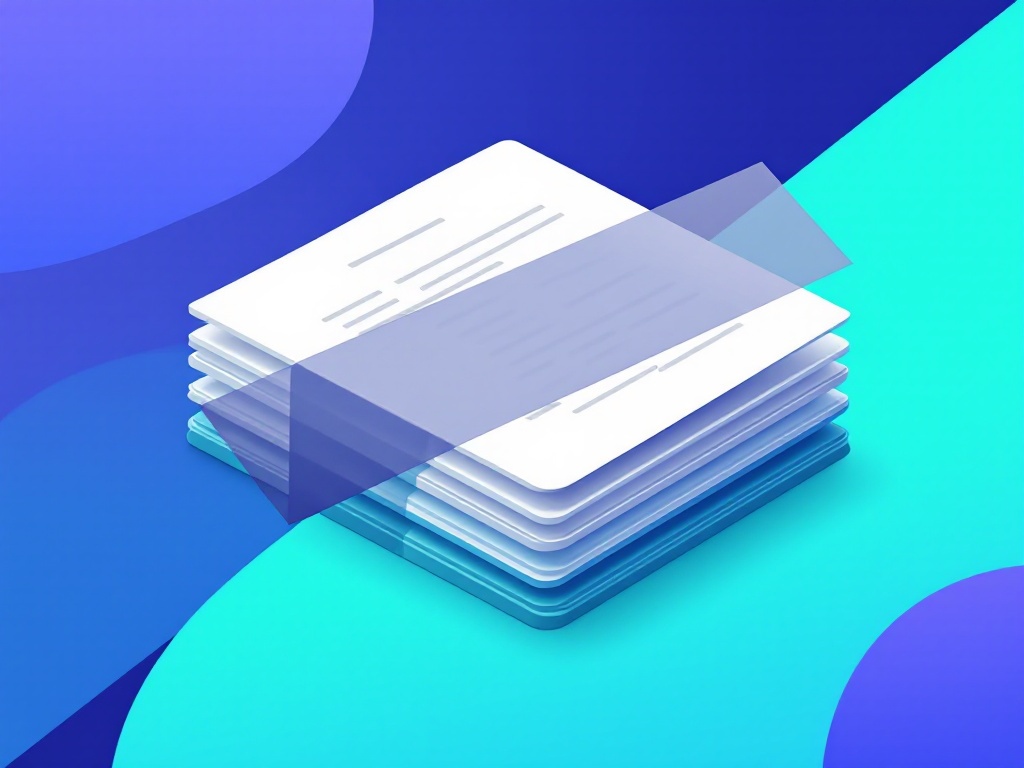
A watermark is text or an image laid over every page, usually semi-transparent. That is the entire mechanism. Which means:
- It communicates status. DRAFT, CONFIDENTIAL, SAMPLE, or your company name — the reader knows immediately what they’re holding.
- It discourages casual misuse. Someone is far less likely to forward a proof stamped SAMPLE across three departments.
- It does not prevent copying, printing, or editing. Anyone with the right software can strip a watermark out. Treat it as a sign on a door, not a deadbolt.
If you genuinely need to stop people opening or editing a file, that’s password protection, and it’s a different job entirely. Watermarking and protecting are often confused because both feel like “securing the document” — they aren’t the same thing at all.
The fastest way: add it in your browser
If you just need the stamp on there now, our free PDF watermark tool does it in a few clicks: type your text, set the opacity and angle, and download. It runs entirely on your device, so the file is never uploaded anywhere — which matters, because the documents people watermark are usually the confidential ones.
Every page gets the same watermark automatically, so a 40-page contract takes the same effort as a single-page letter.
Getting it right: a practical checklist
- Keep opacity between 10% and 30%. Below 10% it vanishes on screen and disappears entirely in print. Above 30% it starts fighting the text underneath. Around 20% is the sweet spot for most documents.
- Go diagonal for status, horizontal for branding. DRAFT and CONFIDENTIAL read best at roughly 45° across the middle of the page. A company name or URL usually sits better horizontally in the footer area.
- Use grey, not colour. Grey stays neutral against black text and prints predictably on any printer. Red might look emphatic on screen, but it turns into a muddy smear on a monochrome office printer.
- Keep the wording short. One or two words. “CONFIDENTIAL” works; “CONFIDENTIAL — DO NOT DISTRIBUTE OUTSIDE THE COMPANY” becomes an unreadable band of grey.
- Watermark last, compress after. Do all your editing first, add the watermark, then run one pass through a PDF compressor if the file needs to be smaller. Watermarking a compressed file and compressing again just stacks up quality loss.
- Always keep the clean original. The watermark is baked in once you save. If you later need an unmarked copy, you need the file you started from.
What to write on it
The wording does more work than the styling. A few that earn their place:
- DRAFT — the version isn’t final and shouldn’t be quoted.
- CONFIDENTIAL — internal only, don’t forward.
- SAMPLE or PROOF — for work sent before payment or sign-off.
- Your company name or domain — for reports and whitepapers you actually want shared.
- The recipient’s name — for documents sent individually. If a copy leaks, you know which one it was.
That last one is quietly the most effective of the lot. It changes the behaviour of the person holding the file far more than a generic CONFIDENTIAL ever does.
When a watermark goes wrong
Two failures come up again and again. The first is the invisible watermark: it looks fine on a bright laptop screen, then prints as nothing at all, because the opacity was set for a backlit display rather than ink on paper. If the document is going to be printed, check it on paper before you send fifty copies.
The second is the scanned document. If your PDF is a scan — a photographed contract, an exported image — the pages are pictures, not text, and a watermark laid over them can wash out signatures or handwritten notes. Keep the opacity at the very low end for scans, or position the watermark along an empty margin instead of across the middle.
Questions people ask about PDF watermarks
How do I add a watermark to a PDF?
Open the file in a watermarking tool, type your text, set the opacity and angle, then download the result. With a browser-based tool it takes under a minute and every page is stamped automatically.
Can you add a watermark to a PDF for free?
Yes. It needs no paid software and no signup. Our tool runs in the browser at no cost, with no limit on the number of files.
Does a watermark protect my PDF?
No. It labels the document, it does not secure it. A watermark can be removed by anyone with the right software. For real restrictions you need password protection, which is a separate feature.
Can a watermark be removed from a PDF?
Yes, with the right tools. This is exactly why it should be treated as a deterrent and a label rather than a security measure.
What opacity should a PDF watermark be?
Between 10% and 30%, with around 20% suiting most documents. Anything fainter risks vanishing in print; anything heavier competes with the text.
Will the watermark appear on every page?
Yes. A watermark is applied across the whole document, so every page carries it without you having to repeat the step.
The short version
Pick one or two words, set the opacity around 20%, use grey, go diagonal for status and horizontal for branding, and keep an unmarked original. And remember what it is for — a watermark tells people how to treat your document, it does not stop them. When you’re ready, our PDF watermark tool will stamp the whole file in a few seconds.
Handy tools for this topic
70+ free tools, zero sign-up
Every ToolBrainy tool runs right in your browser — no accounts, no watermarks and no limits. Compress a PDF, generate a strong password, convert an image and plenty more.